



ABOUT SMOXH CUTTING TOOLS
SMOXH Cutting Tools was founded in 2004 by Mustafa Şimşek, starting out in a small 50m² workshop in Konya, Turkey. Through continuous reinvestment in R&D and production technology, the company has grown into a 15,000m² manufacturing facility staffed by qualified engineers and over 120 experienced personnel. What began as a small operation is now one of Turkey’s established cutting tool manufacturers, exporting to more than 40 countries with strong demand across the European market.
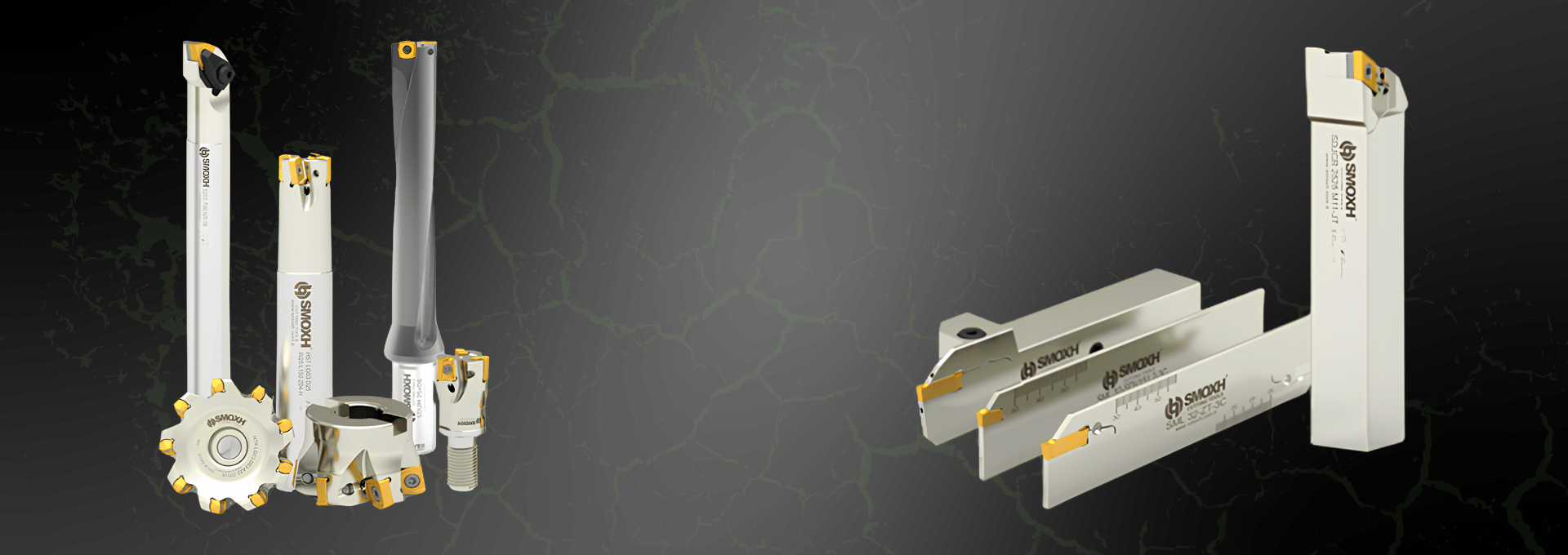
SMOXH manufactures more than 7,000 product variations, with a core focus on cutting insert clamping equipment for CNC lathes and milling machines. The range covers external and internal turning tools, grooving and threading tools, milling and high feed milling tools, adjustable boring bars, groove mills, variable tip drilling tools, and spare parts. Production is backed by ISO-10002:2014 certification, and SMOXH’s focus on cost-efficiency alongside consistent quality has made it a trusted supply partner both in Turkey and internationally.
Manufacturing Facility
Product Variations
Countries Exported To
SMOXH PRODUCTS
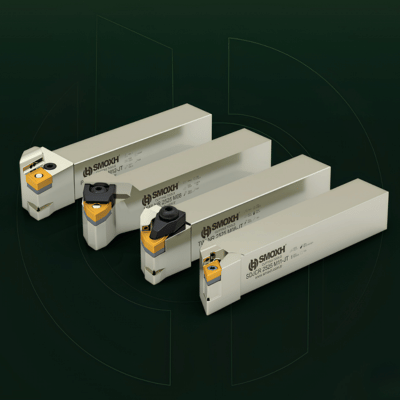
External Diameter Turning Tools
For accurate outer diameter machining
Used for external turning operations on CNC lathes, these tool holders are built for stability and repeatable accuracy across a wide range of workpiece diameters.
- Turning tool holders for external OD machining
- Compatible with standard insert geometries
- Suitable for roughing and finishing passes
- Wide range of shank sizes and approach angles
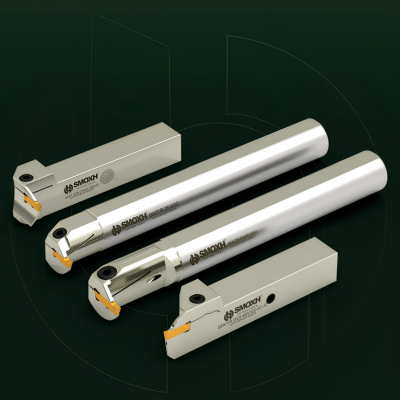
Grooving Tools
For clean, repeatable external grooving
SMOXH’s external diameter grooving tools are built for precise cutting performance and durability, holding up well even in demanding machining conditions.
- External grooving tool holders
- Designed for high durability under load
- Precise, repeatable cutting performance
- Wide range of options to suit different groove widths and depths
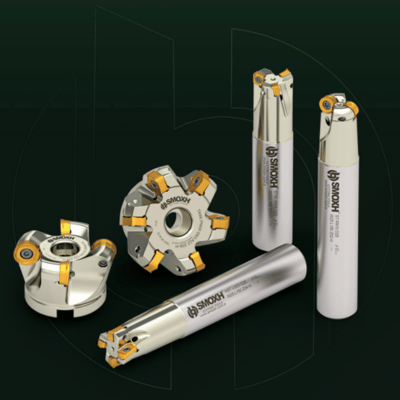
Milling Tools
For general face and profile milling
Milling tool holders designed for CNC machining centres and conventional milling machines, covering everyday face milling and profiling work across a range of materials.
- Face and profile milling cutters
- Range of diameters and insert configurations
- Suited to general purpose milling operations
- Compatible with standard indexable milling inserts
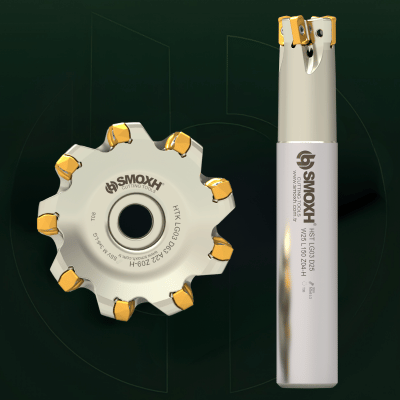
High Feed Milling Tools
For fast material removal rates
Built for high feed rate milling strategies, these tools are suited to shops looking to increase metal removal rates without sacrificing tool life.
- High feed milling cutters
- Designed for increased metal removal rates
- Suited to roughing operations
- Compatible with high feed insert geometries
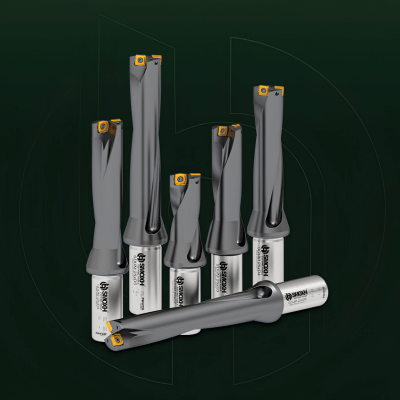
Variable Tip Drilling Tools
For flexible hole-making operations
Drilling tools with variable tip configurations, giving machinists options to match the drill to the hole diameter and material being cut.
- Variable tip drilling tool holders
- Range of tip configurations and diameters
- Suited to a range of drilling depths
- Compatible with standard indexable drill inserts
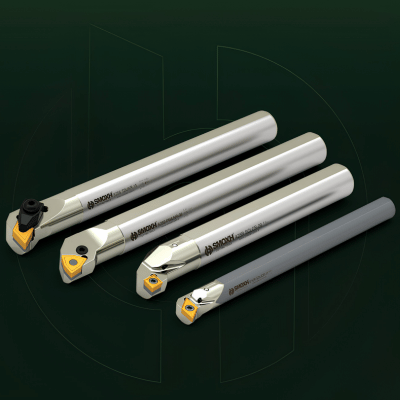
Internal Diameter Turning Tools
For precise boring and internal profiles
Designed for internal diameter work, these tools give machinists the reach and rigidity needed to hold tolerance on bores, counterbores, and internal profiles.
- Boring bar holders for internal turning
- Options for varying bore depths and diameters
- Suited to both roughing and finishing internal cuts
- Compatible with standard indexable inserts
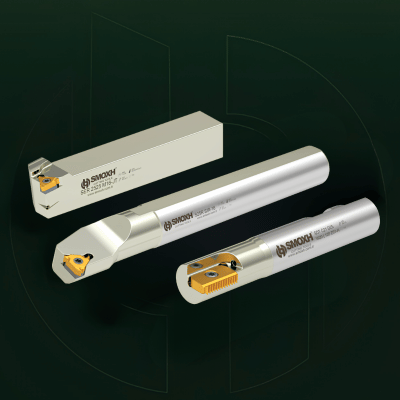
Threading Tools
For accurate internal and external threads
A range of threading tool holders and inserts built to produce clean, accurate thread profiles on both internal and external diameters.
- Threading tool holders for external and internal work
- Compatible with standard threading insert profiles
- Suited to a range of thread pitches
- Built for consistent thread accuracy
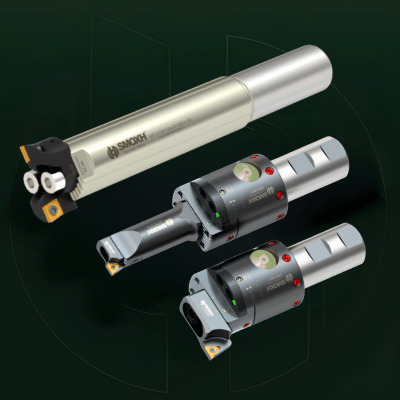
Adjustable Boring Bars
For flexible, fine-tuned bore diameters
Adjustable boring bars that allow machinists to fine-tune bore diameters on the fly, reducing the need for multiple fixed-size tools.
- Adjustable boring bar holders
- Fine diameter adjustment for precision boring
- Reduces tooling inventory versus fixed bars
- Suited to a range of bore depths
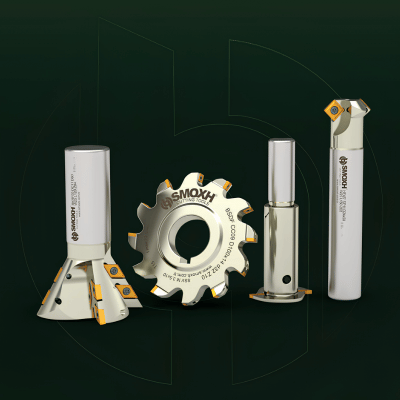
Groove Mills
For milled grooves and slots
Groove milling cutters designed for cutting slots and grooves on milling centres, offering an alternative to turning-based grooving where geometry demands it.
- Groove milling cutters
- Suited to slotting and groove-cutting operations
- Range of widths and cutting depths
- Compatible with standard milling setups
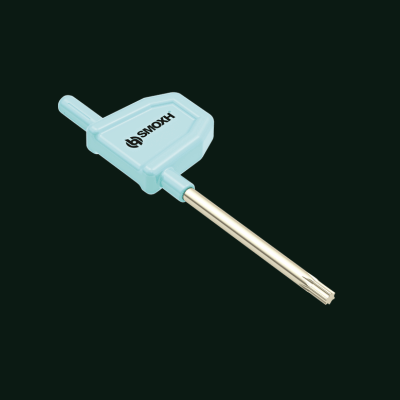
Spare Parts
Keep your SMOXH tooling running
Genuine SMOXH spare parts for existing tool holders, so worn components can be replaced without needing to buy a whole new holder.
- Genuine replacement components
- Available for existing SMOXH tool holders
- Reduces total cost of tool ownership
- Sourced directly through the authorised distributor
Browse the SMOXH Catalogue
The most popular SMOXH product range in one place. Page through it below or download a copy to keep on hand.
Every SMOXH tool holder is built to a specific configuration, so getting the right fit matters. The full SMOXH catalogue gives you the technical detail needed to select the correct tool for your machine, material, and application, whether you’re planning a new setup or replacing an existing holder.
OR
Not sure which tool is right for your application? Our reps can work through the catalogue with you and recommend the best option for your specific job.
Why Workshops Choose SMOXH
Manufacturing Since 2004
Over 20 years of dedicated cutting tool production, from a small workshop to a 15,000m² facility.
Cost-Efficient Without Compromise
Consistent quality manufacturing designed to keep tooling costs competitive.
Tooling for CNC and Conventional Machines
A range built to suit modern CNC lathes and mills as well as conventional machine setups.
Sole SA Distributor
Erikor Engineering Supplies is the only authorised source of SMOXH Cutting tools in South Africa.
Delivered Across South Africa
Order from Edenvale headoffice and get your tools delivered nationwide, free on orders over R1,500.
Local Application Support
Our reps know the product range and can visit your workshop to help you spec the right tool for the job.
See SMOXH Cutting Tools in Action
Take a look at some of SMOXH’s cutting tools and product ranges.
Frequently Asked Questions
When should I use a high feed milling tool instead of a standard milling cutter?
High feed milling tools are designed around a different cutting strategy to standard mills. Instead of taking a deep cut at a moderate feed rate, high feed tooling takes a shallow depth of cut but runs at a much higher feed rate, which shifts the cutting forces in a way that reduces vibration and allows faster metal removal, particularly in roughing operations. This makes high feed tools a strong choice when you’re removing a lot of material and want to cut cycle time, especially on machines with good spindle speed and horsepower to support the higher feed rates. Standard milling cutters remain the better option for finishing passes, tighter tolerance work, or when your machine doesn’t have the rigidity or power to take advantage of high feed cutting. Material also plays a role, since harder materials may limit how aggressively you can push feed rates regardless of tool type.
If you’re unsure whether your job and machine setup suit high feed milling, an Erikor rep can talk you through it based on your material and machine specs.
What is a chipbreaker and does it actually matter when choosing an insert?
A chipbreaker is the raised geometry pressed into the top face of a cutting insert, and its job is to control how the chip forms and breaks as it comes off the workpiece. Without it, you’d get long, stringy chips that wrap around the tool, the part, or even the machine, which is a safety risk and can damage your surface finish. Different chipbreaker geometries are designed for different jobs, some suited to roughing where you’re removing a lot of material at higher feed rates, others suited to finishing where a lighter cut needs a gentler chip curl to protect surface quality. Material also plays a big role, since a chipbreaker that works well in mild steel might clog or fail to break the chip properly in a softer or more ductile material. Getting this wrong doesn’t just create mess, it can shorten tool life and cause poor finish.
If you’re battling with chip control on a specific job, an Erikor rep can help match the right insert geometry to your material and cut depth.
What's the difference between black and gold coated carbide inserts, and is gold better than black?
The colour of a coating tells you which coating material was used, and each one behaves differently rather than one simply being “better” than the other. Gold coated inserts are usually coated with titanium nitride (TiN), which is a good general purpose coating that improves wear resistance and reduces friction, making it a solid choice for a wide range of everyday turning and milling jobs, particularly in steels and general purpose applications. Black coated inserts are typically coated with titanium aluminium nitride (TiAlN) or similar, which handles heat far better than TiN because it forms a protective oxide layer at high temperatures. This makes black coated inserts the better option for higher speed cutting, harder materials, or dry machining where heat build-up is a bigger concern. So the real question isn’t which colour is better, it’s which coating suits your cutting speed, material, and whether you’re using coolant. Running a black coated insert in a low-heat, low-speed job isn’t wrong, it’s just not where that coating adds the most value.
If you’re unsure which coating suits your setup, an Erikor rep can talk you through it based on your material and cutting parameters.
What affects insert wear more, feed rate or surface speed?
Surface speed generally has the bigger impact on insert wear, and it comes down to heat. Cutting speed determines how much heat is generated at the cutting edge, and heat is the main driver of the wear mechanisms that shorten insert life, things like flank wear and crater wear, especially once you’re pushing into speeds beyond what the insert grade is designed for. Feed rate affects wear too, but differently, since a higher feed rate increases the mechanical load and chip thickness rather than the temperature at the edge. This means feed tends to influence edge chipping and mechanical breakdown more than heat-related wear. In practice, if you’re seeing rapid flank wear or the insert going blunt quickly, cutting speed is usually the first thing worth checking. If you’re seeing chipping or edge fracture, feed rate and the insert’s edge strength are more likely the issue. Getting the balance right also depends on the material you’re cutting and the insert grade, since some grades handle heat better while others are tougher mechanically.
If you’re chasing tool life on a specific job, an Erikor rep can help you dial in the right speed and feed combination for your setup.
Need Help Choosing the Right Tool?
Our team is ready to help you find the right tool for the job. Fill in the form and one of our reps will get back to you shortly.