



ABOUT NAREX Ždánice
NAREX Ždánice has been making threading tools in the Czech Republic since 1941. The company started out in 1938 producing decorative items from non-ferrous metals, but wartime metal restrictions pushed founder Otakar Šmíd into tap manufacturing instead, and the business has stuck to that one specialisation ever since. It took its current legal form in 1999 and has continued investing in its production technology, including a recent upgrade of its main production hall and hardening plant.
The range covers machine taps, forming taps, nut taps, hand taps, circular screwing dies and complete threading tool sets, made from high-speed steel and, in the premium FeniX line, from powder metallurgy HSS with TIGAAN coating for longer tool life in tougher materials. Production runs under EN ISO 9001:2015 (since 1997) and EN ISO 14001:2015 (since 2019), both independently audited by TÜV NORD CZECH.
Manufacturing Heritage
Certified Quality System
Years manufacturing taps
NAREX Ždánice PRODUCTS
Machine Taps
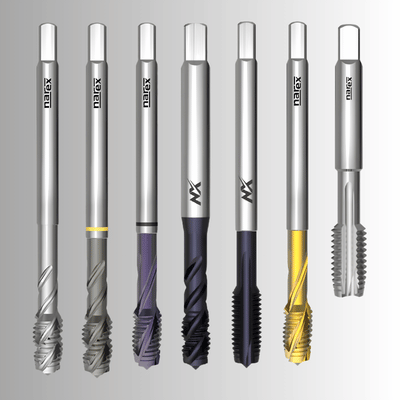
Straight, spiral flute and spiral point taps for CNC and machine tapping
NAREX Ždánice’s core range, covering every common flute style and coating combination for machine tapping in a wide range of materials, from mild steel through to hardened and stainless grades.
- Straight flute, spiral flute (15° to 50°) and spiral point geometries
- ISO 529, DIN 371 and DIN 376 standards
- Coating options: TIGAAN, Futura Nano Top, Balinit Hardlube, steam oxided
- Premium FeniX series in powder metallurgy HSS with TIGAAN next-gen coating for high-alloy and heat-treated steels
- Suitable for structural steel, cast steel, free-cutting steel, stainless steel, cast iron, aluminium and copper alloys
Circular Screwing Dies
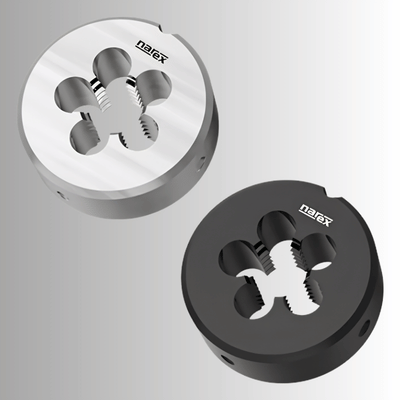
External threading for rods, bolts and studs
Circular dies for cutting external threads by hand or in a die head, covering metric, metric fine, BSP, UNC and UNF thread forms.
- Metric and metric fine to DIN EN 22568
- BSP to DIN EN 24231
- UNC and UNF thread forms
- Nitrided options available for structural, alloyed and stainless steels
Nut Taps
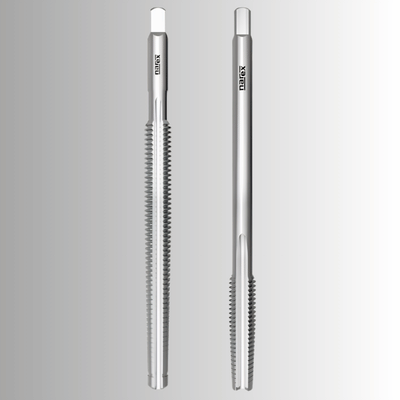
Purpose-built nut taps for high-volume nut production
Nut taps are designed for continuous, high-throughput tapping runs rather than one-off holes, with the long shank and chip clearance nut manufacturing demands.
- Metric threads to DIN 357
- Trapezoidal threads to DIN 103
- Suitable for structural steel, cast steel, free-cutting steel, heat-treated steel and aluminium alloys
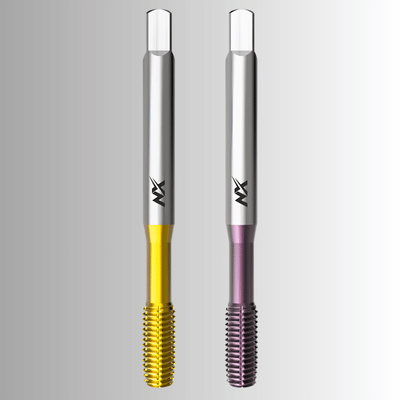
Forming Taps
Chipless thread forming for stronger, cleaner threads
Forming taps displace material rather than cutting it, so there’s no swarf to clear and the finished thread comes out stronger. A good fit where thread strength and cycle time both matter.
- Oil groove and radial internal cooling designs
- DIN 2174 standard
- TiN and TiCN coatings, with HSSE-PM options for stainless and alloyed steels
- Suitable for structural steel, stainless steel, aluminium, copper and zinc alloys
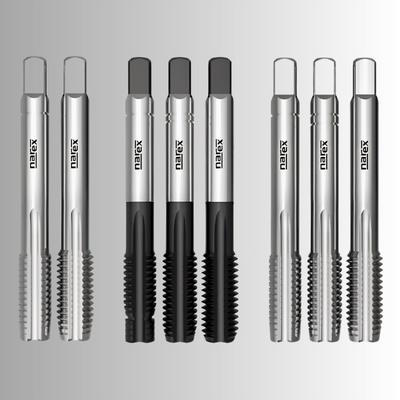
Hand Taps
Taper, second cut and bottoming taps for manual tapping work
For workshop, maintenance and repair tapping where a machine isn’t practical, or where a job needs a taper tap to start a thread and a bottoming tap to finish it in a blind hole.
- UNC and metric threads to DIN 352
- Supplied as taper, second cut and bottoming sets
- Suitable for structural steel, cast steel, free-cutting steel, stainless steel, cast iron and aluminium alloys
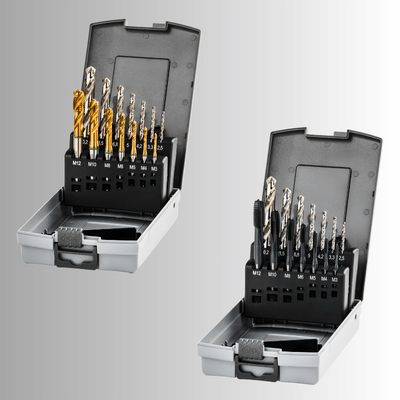
Threading Tool Sets
Combination tap and drill sets, ready to use
Pre-packaged sets pairing the correct taps with matching core drills, so there’s no guesswork on drill sizing before tapping.
- Combination sets covering M3 to M12
- Material-specific sets for structural steel, stainless steel
- Matched drills included to DIN 338
Browse the NAREX Ždánice Catalogue
A complete technical reference covering the full product range, material selection charts, thread standards and dimensional data.
If you’re on the machineshop floor, you don’t want to be guessing which tap will hold up in the material you’re cutting. The NAREX Ždánice catalogue puts the full range in your hands, with the technical detail you need to pick the right tool for the job and get it right the first time.
OR
Not sure which tool is right for your application? Our reps can work through the catalogue with you and recommend the best option for your specific job.
Why Workshops Choose NAREX Ždánice
FeniX Premium Range
Powder metallurgy HSS taps with TIGAAN coating, built for tougher materials and longer tool life.
Material coverage
Taps and dies matched to material, coating and geometry options built for everything from mild steel to stainless and hardened grades.
Full range depth
6 threading categories, one supplier, covers machine, forming, nut and hand taps, dies and sets in one range.
Sole SA Distributor
Erikor Engineering Supplies is the only authorised source of NAREX Ždánice taps and dies in South Africa.
Delivered Across South Africa
Order from Edenvale headoffice and get your tools delivered nationwide, free on orders over R1,500.
Local Application Support
Our reps know the product range and can visit your workshop to help you spec the right tool for the job.
Frequently Asked Questions
Does the coating on a tap actually matter, or is it just marketing?
It matters more than people expect. The coating changes how the tap handles heat and friction at the cutting edge, which is where most tap failures actually start. TiN is a solid all-rounder for general steel work. TiCN holds up better in tougher, more abrasive materials because it’s harder and more heat resistant. Futura Nano Top is built for long-chipping, heat-treated and high-alloy steels where built-up edge is a problem. TIGAAN, used across the FeniX premium range, is NAREX’s next-generation coating for the most demanding jobs, giving longer tool life before you’re re-sharpening or replacing. The right coating depends entirely on what you’re cutting and how hard you’re pushing the tap, so it’s not a one-size-fits-all choice.
Talk to an Erikor rep about your material and tapping requiremnts and they’ll point you to the right combination.
Is the FeniX premium range worth it over a standard HSS tap?
It depends on what you’re running and how many parts you need to get through. FeniX taps are made from powder metallurgy high-speed steel, which gives a finer, more consistent grain structure than conventional HSS, and they carry the TIGAAN coating on top of that. In practice this means better wear resistance and a longer life before the tap needs replacing, particularly in high-alloy, heat-treated or stainless materials where a standard tap wears out fast. For low-volume work in easy-to-machine material, a standard HSS tap will do the job perfectly well and there’s no need to spend more. But if you’re running production volumes or cutting tougher steels, the extra cost of a FeniX tap is usually paid back in reduced tool changes and less downtime.
An Erikor rep can help you work out where that breakeven sits for your specific job.
What's the difference between straight flute and spiral flute machine taps in practice?
The flute style controls where the chip goes, and getting it wrong is a common cause of tap breakage. Straight flute taps push chips forward, ahead of the tap, which works well in through-holes where the chip has somewhere to go. Spiral flute taps pull chips back up and out of the hole behind the tap, which is what you want in a blind hole, because there’s no exit for the chip to fall out the bottom. Use a straight flute tap in a blind hole and you risk packing chips down at the bottom, which can jam and snap the tap before it finishes cutting. The spiral angle also affects how aggressively chips are pulled out, with steeper angles suited to gummier, longer-chipping materials.
If you’re planning a job and aren’t certain which hole type you’re dealing with, an Erikor rep can help you match the flute style to it.
What's the difference between DIN 371, DIN 376 and ISO 529 machine taps, and which one fits my tooling?
These standards are all about the shank and overall dimensions, not the thread profile or cutting geometry, so getting them mixed up is purely a tooling compatibility issue. DIN 371 taps have a reinforced shank, larger than the thread diameter, giving more rigidity and torque strength, which suits smaller to medium threads where stability matters most. DIN 376 taps go the other way, with a reduced shank that lets you fit larger threads into smaller holders or tight machining spaces. ISO 529 is the international standard covering shank diameter, square drive and overall length, and most modern taps are made to comply with both ISO 529 and either DIN 371 or DIN 376, so you’ll often see them labelled together. The main thing to check is that the shank and square drive match your chuck or holder before you order.
If you’re unsure, an Erikor rep can help you confirm it.
Need Help Choosing the Right Tool?
Our team is ready to help you find the right tool for the job. Fill in the form and one of our reps will get back to you shortly.